When someone close is gone, their photos take on a different weight. They are scattered in albums, on the grandchildren's phones and in a box in a closet, and each one is a moment that someone remembers. A film in their memory is a way to bring those moments into one place and watch them together. Here we have written what we have learned about making a film like this, at your own pace and without pressure.
What kind of film suits a loved one's memory?
In most cases a memories film is the right choice. In this kind of film each photo wakes up for a few seconds: a woman taking a step forward on her wedding day, two brothers turning toward each other, a child lifted into the air. Then the film moves on to the next memory. It suits old family photos especially well, photos where the person is with the people they loved, and a mix of different periods and different people.
Sometimes a growing-up film suits better. In a growing-up film the photos flow into one another in one continuous motion, and you see the person grow and change before your eyes, from a baby to a young person to an older adult. It is a good choice when you have photos of them from many ages and you want to tell the life story of one person over the years. A growing-up film works best when you can see them clearly in every photo.
If you are torn, ask yourself what you want viewers to feel: the journey of a whole life, or the small moments and the people around them. You can also simply try. At GrowingTale the first 2 animations are a free preview, with no credit card, and within a few minutes you will see how your photos look in motion.
How do I gather photos from family members?
The most precious photos are usually with different people. It is worth reaching out to a few family members and close friends and asking gently. Here is a simple way to do it:
Choose one person to collect the photos, so they do not scatter across many conversations.
Send a short message to family members, and ask for photos from different periods and from moments they remember.
Ask them to send the photo file itself and not a screenshot, because screenshots and very blurry photos work less well.
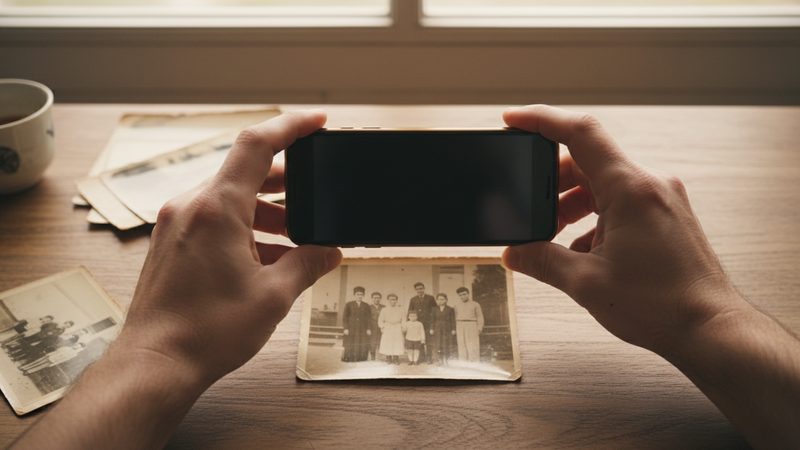
Photos from old albums can be photographed with a phone. We wrote a detailed guide on how to scan photos from an old album with your phone.
Set a date when you stop collecting, so there is time left to choose quietly.
It is worth remembering that not everyone is able to search for photos right away. Someone who finds it hard can send one or two photos, and that is a lot.
Which photos should I choose for a memorial film?

You do not need all the photos. A film of two or three minutes, which is 24 to 36 photos, is usually enough to tell a whole story without tiring anyone. A few things that help with the choice:
- Different periods. A photo from childhood, from youth, from the wedding day, from the years with children and grandchildren. That way the film tells a whole life and not just one period.
- The people they loved. A spouse, children, close friends. Family photos with several people can work nicely, and it is better when in most photos you can clearly see the person the film is about.
- Everyday moments. At a family meal table, in the garden, in the kitchen, on a trip. Often it is the simple photos that remind everyone how they really were.
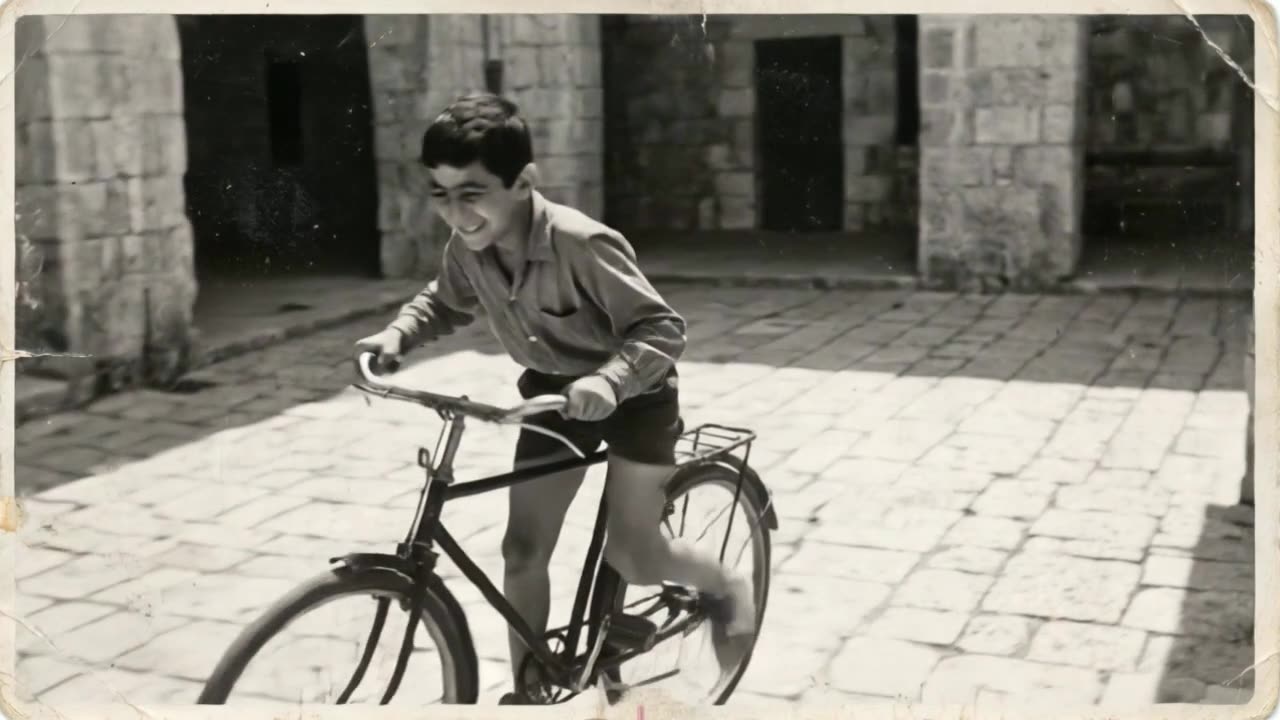
- Clear faces. Sharp photos where the face is clearly visible work best. Black-and-white photos and scans from albums work very well.
If there is a photo that matters to you but it is a little blurry, you can still include it. This is a film of a memory, not a photography contest. For a few more simple rules on choosing photos, see the article on organizing family photos.
In what order should I arrange the photos?
There are two main ways, and both are right.
| Order | What it looks like | When it suits |
|---|---|---|
| Chronological | From the earliest photo to the last | When you want to tell the life story from the beginning, and when you have photos from many years |
| By theme | Groups of photos: family, work, friends, hobbies | When it is hard to know when each photo was taken, or when you want to highlight what they loved |
In chronological order you do not have to know the exact year. It is enough to arrange by what you see: the age, the clothes, who else is in the photo. In order by theme, it is worth opening and closing with strong photos, for example a photo of them smiling at the opening and a photo with the whole family at the end.
The packages also include extra tries and photo swaps, depending on the package, so the order does not need to be perfect from the start.
What music and what closing words suit it?
Music sets much of the feeling. You can choose a quiet melody from the site's music library, or upload a song they loved, a song that played at home, or one they used to sing to the grandchildren. A familiar song like that can touch viewers more than any other melody.
At the opening you can put a simple dedication card: a name, the years and one sentence. At the end you can add a closing note with a few short words. It is best to write simply, the way you would say it at a family table. For example: "We love you, we remember, we will keep telling stories about you," or a sentence they used to say. You will find more ideas in the article what to write in the dedication at the start of a video.
Where do I show a memorial film, and how long does it take to make?
A film like this suits several situations:
- At a memorial gathering or a get-together in their memory, on a screen or projector, before the words or after them.
- At a family evening, at home, on the living room TV.
- In private sharing, with family members who live far away or who could not come.
You download the full film in HD, wide (16:9) and with no watermark, and it plays from a computer, a TV, a projector or a USB drive. If you are showing it away from home, it is worth checking the equipment ahead of time. We wrote about this in the article how to show a video at an event.
As for time: most of it goes to gathering and choosing the photos, not to the film itself. The free preview arrives within a few minutes, and the full film is usually ready 10 to 20 minutes after payment, depending on the length. So you can make it close to the date, and there is no need to start weeks ahead.
Frequently asked questions
How many photos do I need for a film in memory of a loved one?
From 2 to 100 photos. Every 12 photos make about one minute of film, and for watching together at a memorial gathering, a film of one to three minutes is usually enough.
Can I use old black-and-white photos?
Yes. Black-and-white photos, scans from albums and phone photos of printed pictures all work well, especially when the faces are clearly visible.
What if we only have a few photos?
Even 2 photos are enough for a short film. Sometimes a few photos you love say more than dozens of photos.
Will anyone else see our photos?
The photos are not shown publicly, and they are handled according to the site's privacy policy. You download the film and decide for yourself who to share it with.
Can I change anything after the film is ready?
To a degree, yes. The packages include extra tries and photo swaps, and the number depends on the package.
Will the faces in the film look exactly like the photo?
We cannot promise that every detail of a face will stay identical to the original photo. The film aims to keep everyone looking like themselves, and sharp photos where the face is clearly visible work best. It is worth watching the free preview before you continue.