A milestone birthday is a chance to stop and look back. Rather than searching for photos at random, give the film a clear shape, one your guests will understand without any explanation. This article gives you a table of how many photos you need for each age, a method for choosing photos, and tips for the ending and for showing the film.
How many photos do I need for a 50th, 60th or 70th birthday?
Each decade of your parent's life gets a few photos, which keeps the film balanced. If you have fewer photos, that is perfectly fine: for decades with little to choose from, three photos are enough, and for the richest decades you can take seven. A whole decade with no photo will look like a hole in the story, and a decade with ten photos will pull the film out of balance.
| Birthday | Decades | 4 photos per decade | 6 photos per decade |
|---|---|---|---|
| 50 | 5 | 20 | 30 |
| 60 | 6 | 24 | 36 |
| 70 | 7 | 28 | 42 |
| 80 | 8 | 32 | 48 |
About 12 photos fit in a minute. 24 photos make a 2-minute film (₪159.90), 36 photos make 3 minutes (₪219.90) and 48 photos make 4 minutes (₪259.90). If your number falls in between, for example 28 photos, you can order an exact package for the number of photos you have.
How do I build the film decade by decade?
Split their life into decades. By age: 0-10, 10-20, 20-30 and so on, up to today.
Decide how many photos for each decade. Four to six is a good number. For decades with fewer photos, three is fine.
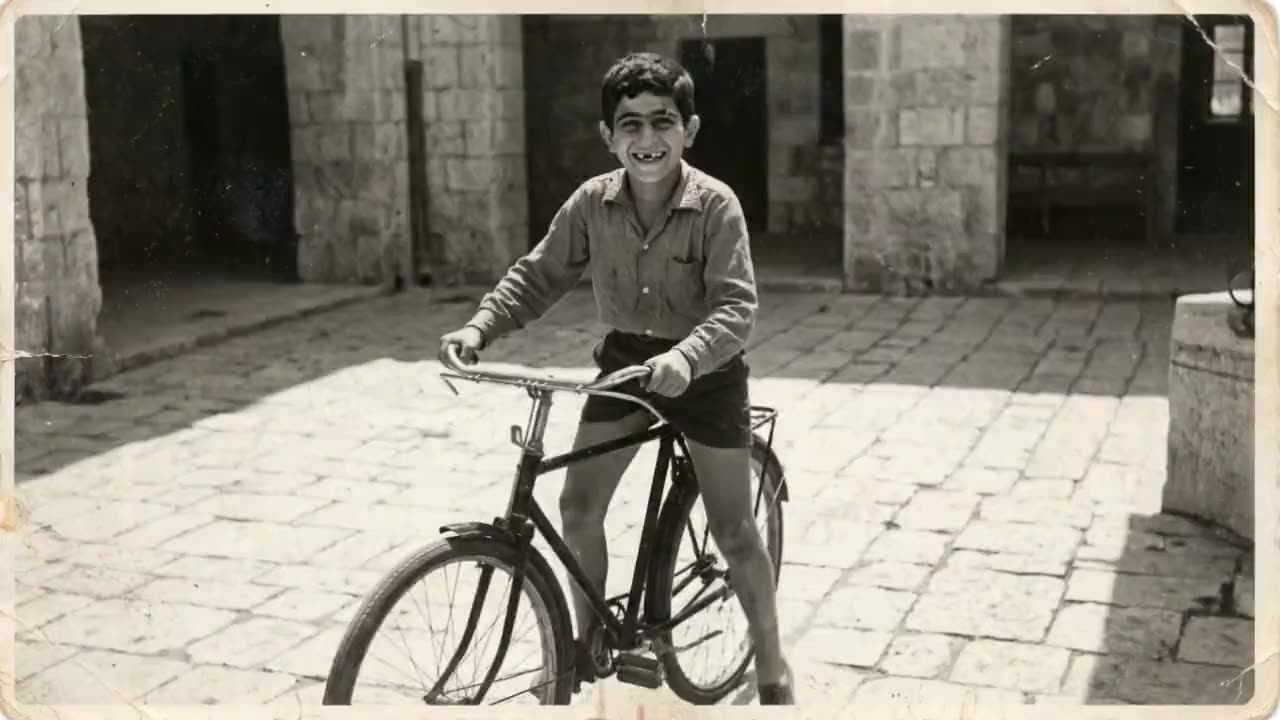
Choose one strong photo to open with. Pick a photo where your parent is clearly visible and smiling, ideally from childhood. It sets the tone for the whole film.
Put them in order, earliest to latest. A clean timeline makes viewers feel they are living the years alongside them.
End with a photo from today. A photo with the family is best, and if there are grandchildren, they should be in it.
When the film is built this way, guests feel the story without anyone explaining it: childhood, adulthood, family, and at the end everyone together in the same room.
Which photos should I pick from each decade?

Each period tells something different, so you can look for a different kind of photo in each:
- Childhood: a photo at a young age, one with your parent's own parents, one from school.
- Teenage years: friends, a holiday, a family event. An old passport photo works nicely too.
- Young adulthood: studies, a first job, meeting their partner, the wedding.
- Starting a family: a photo with each child in their first year, holidays, a new home.
- Working years: hobbies, celebrations, trips, moments that show what they love.
- Today: a family meal, grandchildren, a recent smiling photo.
One important rule: in most photos, your parent should be clearly visible. Group photos work, as long as you can easily find them. A photo where they are small and far off at the edge of the frame will work less well.
Where can I find photos from the early decades?
The early decades are usually the hardest part, because the photos are printed and scattered. Here are some places to look:
- Albums at your parent's home, or at the home of their brothers and sisters.
- Other relatives: aunts, uncles, cousins and old friends often keep a lot of photos.
- Old boxes and drawers. Sometimes the best photo is hiding there.
If it is a surprise, ask each of the siblings or children to send 5 photos, so you get variety without your parent knowing. You can photograph a printed photo with your phone in daylight, without a flash. We explain exactly how in our guide to scanning photos from an old album with your phone.
Growing-up film or memories film: which suits a parent?
There are two types of film. In a growing-up film, each photo flows into the next, so you watch one person grow up over the years. In a memories film, each photo gets a few seconds of movement and becomes a living moment.
If your parent is in almost every photo, a growing-up film is a good choice, because it shows the road from child to today. If you have many family photos, places and other people, a memories film may suit you better. On the birthday video page you can see examples of both.
The film aims to keep everyone looking like themselves. Sometimes one photo comes out a little different, and you can fix it with another try or by swapping the photo.
How do I finish the film and show it at the birthday?
You can add an opening card with a dedication, music from the library or a song you upload yourself, and an ending card. A song your parent loves is sometimes the most moving choice. If the film starts with a childhood photo, you can open with a short card showing your parent's name and year of birth. If you are not sure what to write, we have 30 dedication examples.
The full film is usually ready 10 to 20 minutes after payment, so you can finish it a few days before the party and check it calmly. You download it in HD 16:9 with no watermark, and there is also a share link, so you can send it to siblings and relatives who cannot come. For connecting to a screen and speaker, see our guide to screening a video at an event.
Frequently asked questions
Can I include photos of the whole family in the film?
Yes. Family photos are an important part of the story. Just make sure your parent is clearly visible in most of the photos.
What if we do not have many old photos?
That is fine. A 1-minute film holds 12 photos and starts at ₪79.90. You can mix a few old photos with newer ones, as long as there is a clear story.
Can I try before I pay?
Yes. The first 2 animations are free, with no credit card, once per person.
How long does it take to get the film?
The full film is usually ready 10 to 20 minutes after payment.
What if a face in a photo does not look right?
The film aims to keep everyone looking like themselves, but sometimes there is a small difference. You can try another version or swap the photo.
Can I get a refund?
You can ask for a refund within 30 days of purchase, under the refund policy on the site.